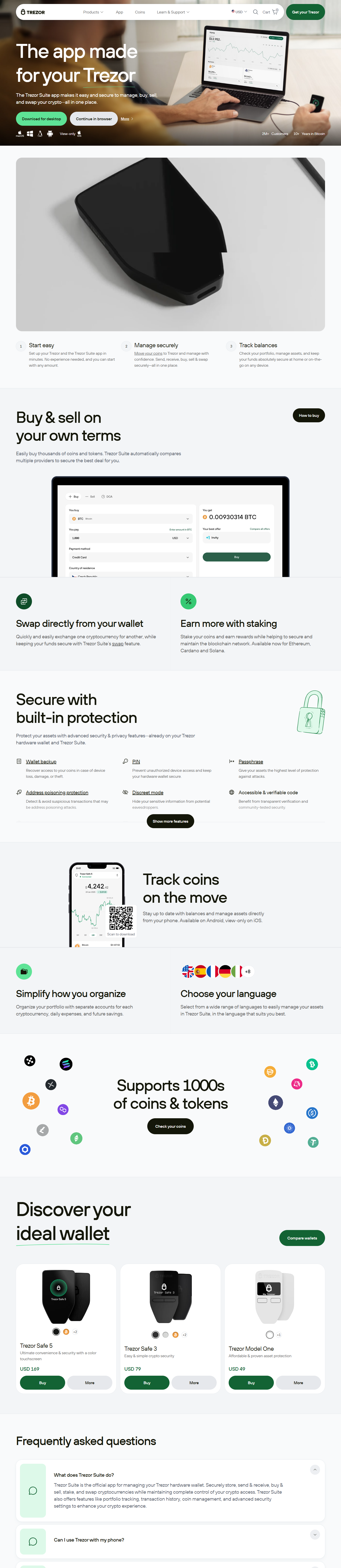
As cryptocurrencies continue to gain global adoption, the need for strong security solutions has never been more important. Online wallets and crypto exchanges can be vulnerable to hacking, phishing, and technical failures, placing digital assets at risk. A Trezor Hardware Wallet offers a secure alternative by allowing users to store their cryptocurrencies offline while maintaining complete ownership and control. This guide explores the purpose, functionality, advantages, and best practices for using a Trezor Hardware Wallet safely.
A Trezor Hardware Wallet is a physical security device designed to store cryptocurrency private keys offline. Private keys are the most critical component of any crypto wallet, as they grant access to funds. By keeping these keys offline, Trezor protects users from online threats that commonly target software wallets.
The wallet connects to a computer or mobile device only when needed to manage transactions. Even during this process, private keys never leave the device, ensuring an extra layer of protection against cyberattacks.
Trezor uses advanced cryptographic technology to safeguard private keys. When a transaction is created, it is signed securely inside the hardware wallet. Only the signed transaction is sent to the connected device for broadcasting to the blockchain network.
Because the signing process happens internally, malware or spyware on a computer cannot intercept or manipulate sensitive data. This design makes Trezor one of the most secure ways to manage cryptocurrencies.
Trezor offers true cold storage by operating independently of constant internet connectivity. This protects assets from online vulnerabilities and unauthorized access.
Users must enter a PIN code directly on the Trezor device to unlock it. This prevents unauthorized access even if the device is physically stolen.
During the initial setup, Trezor generates a recovery seed made up of randomly selected words. This seed is the only way to recover funds if the wallet is lost or damaged.
For users seeking enhanced protection, Trezor supports an optional passphrase feature. This creates an additional layer of encryption beyond the recovery seed.
Trezor supports a wide variety of cryptocurrencies and tokens, making it suitable for users who hold multiple digital assets.
The wallet’s open-source software allows independent security audits. This transparency increases trust and ensures continuous security improvements.
One of the biggest advantages of a Trezor Hardware Wallet is full control over funds. Unlike exchange wallets, users do not rely on third parties to store or protect their assets.
Another benefit is long-term asset safety. Investors who plan to hold cryptocurrencies for extended periods can store their assets securely without worrying about online breaches.
Trezor wallets are also known for their reliability and durability. Designed for everyday use, they provide consistent performance and strong physical security.
Additionally, Trezor emphasizes user education and safety. Transaction verification on the device screen helps prevent accidental transfers and malicious address substitutions.