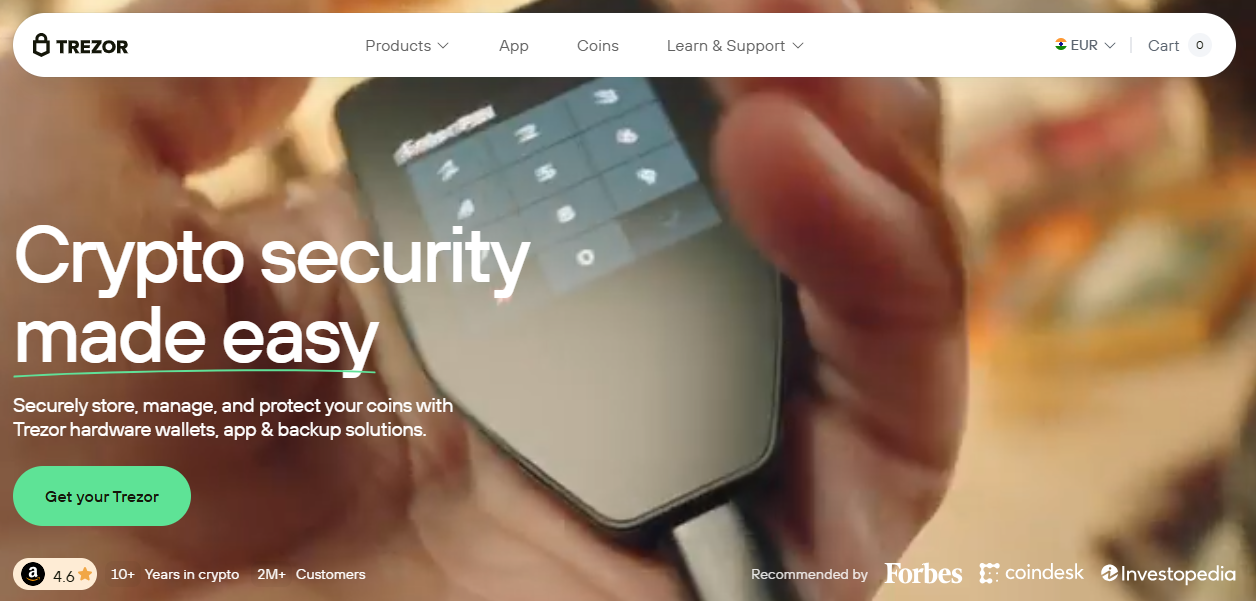
Setting up a Trezor Hardware Wallet is straightforward. After connecting the device, users follow guided steps to initialize it, create a PIN, and generate a recovery seed. This process ensures that the wallet is unique and secure from the start.
Once setup is complete, users can manage their cryptocurrencies by sending and receiving funds. All transaction details must be confirmed directly on the Trezor device, reducing the risk of fraud.
Proper storage of the recovery seed is essential. It should never be stored digitally or shared with anyone. Keeping the seed offline in a secure location ensures long-term safety.
Users should regularly check for firmware updates to ensure their device has the latest security features. Keeping the device physically secure and avoiding unknown computers when accessing funds further enhances safety.
It is also recommended to use the passphrase feature for high-value holdings. This adds an extra defense layer in case the recovery seed is compromised.
A Trezor Hardware Wallet is ideal for long-term investors, frequent traders, and anyone who values security and independence. Beginners can also benefit from its simple interface and guided setup process.
Whether holding small amounts or managing large portfolios, Trezor provides a reliable solution that aligns with the decentralized nature of cryptocurrency ownership.
The primary purpose is to securely store private keys offline, protecting cryptocurrencies from online threats and unauthorized access.
Yes, because private keys are stored offline and never exposed to the internet, making hacking extremely difficult.
Yes, the wallet can be connected to different computers or mobile devices without compromising security.
Funds can be recovered using the recovery seed on a new compatible hardware wallet.
No, Trezor is designed with a user-friendly interface suitable for beginners and advanced users alike.
Yes, it is one of the best options for long-term storage due to its offline security and robust design.
This article is intended for educational and informational purposes only and should not be considered financial, investment, or legal advice. Cryptocurrency involves risk, and users are responsible for protecting their private keys, recovery seeds, and making informed decisions.This content is provided for informational purposes only and does not constitute financial, legal, or investment advice. Cryptocurrency involves risk, and users are responsible for safeguarding their assets and conducting independent research before making any decisions.